Tampilkan postingan dengan label Gowes. Tampilkan semua postingan

Minggu, 31 Maret 2013

Gowes Bandung to Sukabumi 9 - 10 Maret 2013

Melintas jembatan Pasupati Bandung


Istirahat di daerah dekat Kota Baru Parahyangan


Istirahat di daerah Cipatat


Istirahat sebelum kota Cianjur


Menuju Cianjur, hujan


Istirahat dan makan sebelum masuk kota Cianjur


Beres makan dan istirahat siap menuju Cianjur kota


Cianjur


Narsis sebentar didepan kantor DPRD Cianjur


Minggu pagi di alun alun kota Sukabumi


Suasana alun alun Sukabumi di minggu pagi


Minggu sore packing sepeda menuju pulang ke Bandung


Beli oleh oleh khas Cianjur

Demikian photo photo gowes saya bersama rekan dari Pegat Urat Bike (PUB) Bandung
Salam Gowes dan Go Green

Minggu, 20 Januari 2013

Choose the type of bike to suit our needs.


Choose the type of bike to suit our needs.


There are so many types of bikes at the present time in the market.
With a variety of sizes, types and prices. But do the wrong type of bike when you became interested in the bike, and do not buy one, buy a bike according to your needs or hobbies.
Of course, very wrong if you like cycling in the wild, mountainous but you choose a type of bike for the pavement or OnRoad. On the contrary if you like cycling smooth asphalt streets but instead you choose a mountain bike that is not wise.
Many losses if you are wrong in choosing type of bike that is not as intended.
Therefore choose a bike according to your hobbies and passions

Is the bike practicing once a week can make me healthier?


Is the bike practicing once a week can make me healthier?
I've been making the bike includes a sport that I love, as compared to other sports I prefer sepedah as a means for the sport. Besides being able to make my body fit, cycling also makes me more concerned with nature when I passed my friend and my friend were cycling, can also enjoy the natural beauty of the mountains that we have always made
​​a point of cycling.

But the problem is I just cycling every day of the week, so only once a week and only 4 times a month my exercise bike. Are routine like that would make my body healthy?
Or maybe the better it is cycling every day? But I can not possibly do it every day, because the day that allows for me for Sunday only for cycling.

Sabtu, 14 Januari 2012

10 Film bertema Sepeda yang wajib di tonton pecinta Gowes

Buat agan agan yang suka Gowes nih ada film bertema sepeda yang layak buat ditonton.
Biar gowes lebih semangat dan tambah cinta bersepedah.

1.     -Shakariki!-

“S  "Shakariki!,” the first manga series by artist Masahito Soda, is being adapted as a live-action film, starring members of the acting group D-BOYS. Serialized in Shonen Champion from 1992 to 1995, the comic focused on high schoolers involved in the sport of bicycle racing. D-BOYS leader Yuya Endo stars as Teru, who is trying to revive his school’s defunct bicycle club. Yuichi Nakamura (“Kamen Rider Den-O”) plays the talented Poppo, and Hiroki Suzuki (“Juken Sentai Gekiranger”) plays Yuta, a racer from a rival school. The three actors began practicing in December, and last week they underwent more intensive training that included cycling for 60km every day. The rest of the cast includes Noriko Nakagoshi as Teru’s sister Sayuri, Miho Nakai as one of the team’s mothers, Akira Emoto as the school principal, Yoichi Nukumizu as vice principal, and Taizo Harada as the team’s coach.

 
1.        
Pe  -Pee-wee's Big Adventure-
The greatest movie ever made about cycling is the wildly creative, idiosyncratic masterpiece Pee-wee's Big Adventure. Stop rolling your eyes.
The movie, which turns 25 in 2010, is a polarizing cinematic curiosity. People love it or loathe it, mostly because of writer/actor Paul Reubens's deeply eccentric—or creepy, depending on how you see it—performance as a bow-tie-wearing man-boy who talks in a kiddie voice, utters inane phrases like "I know you are, but what am I?" and dances in white platform shoes to "Tequila."
The central plot device of PWBA is the traumatic theft of Pee-wee's prized bike: a customized, cherry-red vintage Schwinn with handlebar tassels, rearview mirrors, metal panniers and an enormous lion's face atop the head tube. It gets ripped off early in the film—while Pee-wee is visiting his local bike shop, no less—and the remainder of PWBA is a raucous, Bob Hope-style road movie in which the juvenile protagonist fends off an escaped prisoner, an outlaw motorcycle gang and a eyeball-popping ghost truck driver named Large Marge as he tries to find his cherished ride, which, thanks to a shady psychic—an homage to The Bicycle Thief—he believes is stashed in the basement of the Alamo.

-Breaking Away-

Working-class kids, restless in a college town, try to…we really don’t have to walk you through this one. All you need to know is that’s not just one of the best cycling films ever made, but one of the best films period. It won the 1980 Academy Award for Best Screenplay and was nominated for four other awards


1.        
-T -The Triplets of Belleville-

People before they see Triplets for the first time: “Am I really about to watch an animated French film?” Same people at end: “…” (They’re speechless.) This story of a determined grandmother trying to rescue her cyclist grandson after his kidnapping at the Tour de France—and really, that’s just the half of it—is an almost wordless, thoroughly unforgettable adventure. And a stunning homage to Fausto Coppi.


1.      - American Flyers-

Pre-Bull Durham Kevin Costner in a mustache is one thing, but Rae-Dawn Chong’s wheel change is the real stunner in this fun story of two brothers who tackle the Hell of the West through the Rockies. Some of the details are ludicrous—the way the Russian pros bob and weave as they attack—but as celebration of the 1980s American cycling scene, with appearances by the 7-Eleven Team and the gone-but-missed Coors Classic, it’s worth your time.


1.       -The Bicycle Thief-

Th The unflinching tale of a poor father and son searching for the father’s stolen ride—a bike he needs to get a job—is a bleak but truthful story of survival. It’s also a rebuke to Hollywood slickness. It ushered in a new era of cinematic realism and is routinely listed as one of the greatest films of all time. Don’t let the subtitles scare you off.

 
1.     - A Sunday in Hell-

If you’ve ever struggled to explain the consuming passion of bike racing to civilians, refer them to this film instead. A chronicle of the 1976 Paris-Roubaix race—with riders like Eddy Merckx, Roger De Vlaeminck and Francesco Moser—it’s a transporting documentary that drops you into the cobblestone dust, soaks you in sweat and fetishizes the suffering of the world’s greatest one-day race.


1.       -Stars & Watercarriers-

Another documentary by Jorgen Leth (director of A Sunday in Hell), this one follows the 1973 Giro d’Italia, but it’s not a story about the race—there are few clues to the general classification, time differentials, stage winners or other facts. Instead, you get unforgettable images of Eddy Merckx, such as when he lets a hometown racer go off the front for a moment of glory then ferociously chases and passes him with a look that would give Lance Armstrong nightmares. And you get the watercarriers, the workers, whose images are perhaps more inspiring than Merckx’s—not to mention the somehow magic scene of glass bottles of water being opened with church keys and passed around the pack during the race.

 
1.     -  2 Seconds-

After a moment of weakness in the start gate—the titular two seconds—a female downhill mountain biker is kicked off her team and, in a life crisis, becomes a bike messenger. Her job puts her in contact with a guru-like Italian bike shop-owner who helps her understand and appreciate the culture of road-bike racing. This Canadian film (in French, with English subtitles) is nearly too light and corny to leave an impact, but somehow gets the feeling of wanting to be a bike racer just right. It’s best when discovered without hype, so pretend we didn’t like it much and you just stumbled across it on your own.


-Key Exchange-

Daniel Stern—Breaking Away’s Cyril—returns in another cycling-related role in this movie adaptation of a successful off-Broadway play about the foibles and farces of relationships 1980s New York City. It’s fluffy, illogical and has cycling scenes of questionable verisimilitude. Yet there is something powerful about the naïve yearning of the two main male lead characters—Stern and Ben Masters—to be in the Tour de France that strikes the heart of committed cyclists. Even through the ’80s hairdos and wardrobes.


Minggu, 20 November 2011

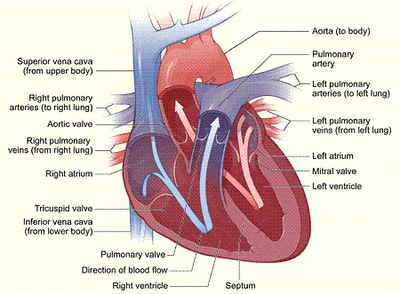
Perhatikan Jantung Saat Gowes


Kenapa dibilang pinter ? karena tanpa perlu diprogram jantung dapat berdetak sesuai dengan kebutuhan kita. Saat santai hendak tidur jantung hanya akan berdetak sekitar 40 sampe 48 kali permenit, saat kita  hidup biasa, maksudnya melakukan pekerjaan ringan seperti mengetik, meeting dan sebagainya jantung akan berdetak sekitar 60 sampai 65 kali permenit. Dokter menyebut jumlah detak jantung saat hidup ini dengan istilah rest heart (RHR), lantas saat tubuh kita bekerja keras detak jantung akan meningkat dengan sendirinya, toh jantung juga punya keterbatasan, jantung akan protes jika dipaksa untuk menaikan detak dalam tempo mendadak, meski dia ok ok saja diajak bekerja keras tapi  penambahan beban harus dilakukan secara perlahan. Kekuatan jantung ada juga batasannya, untuk soal ini para dokter punya program standar, disebut dengan istilah MHR atau maximum heart rate alias detak jantung maksimal, biasa disebut red zone. Saat beraktifitas kita tidak  boleh memaksa jantung melampaui batas red zone.

Ada rumus sederhana yg bisa dijadikan pegangan, yaitu 220 dikurangi umur kita, jika umur kita 40 thn, red zone kita adalah 180 (220-40). Tapi ada sedikit yang perlu diingat, umur 43 biasanya dihitung 40, sebaliknya umur 48 dimasukan kelompok umur 50, intinya dibulatkan keatas atau kebawah menjadi angka puluhan terdekat.
Kita tau kan zona latihan, sering disebut working heart rate (WHR), istilah itu dipakai untuk menunjuk suatu daerah antara detak jantung "hidup normal” dan red zone (MHR), misalnya umur kita 30 thn dan detak jantung kita saat beraktivitas biasa adalah 55 kali, maka WHR atau training zone kita adalah 56-190, dengan kata lain kita memiliki bilangan angka training zone sebanyak 136, matematikanya WHR = daerah antara RHR hingga MHR. Saat berlatih detak jantung tidak boleh turun ke bawah level RHR atau naik keatas level MHR. Dua duanya menunjukan ada ketidakberesan, kalau terjadi ada kemungkinan kita telah mengalami overtraining.


Cara gampang menggunakan "pulse" dan heart rate monitor, Cyclometer yang bagus umumnya memiliki fitur penghitungan detak jantung. Kalau gak ada bisa minta temen kita untuk memegang pergelangan tangan untuk menghitung denyut nadi, penghitungan biasanya dilakukan dengan waktu 15 detik, lalu hasilnya dikali 4. Jika dalam 15 detik nadi berdenyut 40 kali, maka detak jantung kita adalah 160 kali.
Kita sebenarnya bisa mengendalikan detak jantung saat kita besepedah, ini tidak hanya demi keselamatan jantung tapi  juga untuk mensukseskan acara bersepedah kita, makin cepat detak jantung berpacu akan membuat kita makin cepat lelah. Kita mungkin bisa bertahan hingga 10 jam mengayuh sepeda dengan santai, tapi  apabila diporsir mengayuh dengan mengebut diatas sadel selama 30 menit atau 1 jam sudah sangat hebat, rahasianya dengan mengayuh santai penggunaan energi oleh tubuh akan jauh lebih efisien, sebaliknya saat kita memaksakan diri penggunaan energi akan makin boros.


Zona latihan ada 4 bagian 
Pertama:
Zona Efisiensi dan Rekoveri
Zona ini terjadi jika kita menjaga detak jantung berada pada level 60-70 persen dari MHR, misal usia kita 40 thn, artinya 108-126 kali permenit, saat jantung kita berdetak pada level ini, pasokan energi kedalam otot kita dijamin akan terus terisi, kalori yang dibakar untuk menggerakan otot akan langsung terisi. Lalu kenapa disebut juga dengan zona rekoveri? Karena  pada  level ini pasokan kalori ke otot bisa lebih besar dari yang dibutuhkan,  alhasil jika misalnya, sebelum ini kita memaksakan diri, otot yang semula sempat  kehabisan kalori bisa di charge ulang, maaf ini bagi  mereka yang kegendutan, proses pembakaran lemak baru akan terjadi pada  level ini.
Kedua:
Zona Aerobik

Zona ini tercapai saat kita memacu detak jantung ke level  antara 70 dan 80 persen dari batas maksimum (MHR), jika kita  40 thn artinya sama dengan 126- 144 kali permenit, zona ini bermanfaat untuk mempertinggi kekuatan jantung dan sistem peredaran darah. Sistem transportasi pemasukan oksigen dan pembuangan CO2 juga  ditingkatkan ke level maksimal. Perbaikan sistem kardiovaskular dan sisitem transportasi oksigen itu akan tetap bertahan setelah latihan selesai, membiasakan diri berlatih di zona ini akan membuat pembakaran lemak berlangsung optimal.
Ketiga:
Zona Anaerobik
Zona ini terjadi saat detak jantung dipacu antara 80-90 persen dari MHR, pada  level ini pembakaran kalori yg dipakai untuk menggerakan otot sudah sedemikian kencangnya. Saking kencangnya proses pembakaran itu akhirnya meninggalkan sampah berupa asam laktat yang akan menumpuk diujung ujung persendian dan pada tingkat tertentu tumpukan asam laktat itu akan membuat otot menjadi kaku dan sulit digerakan. Jika tumpukan laktat sudah tak bisa ditolerir tubuh, kemungkinan kita akan terkapar kecapaian, tapi dengan latihan yang  bagus dan sistematis, toleransi tubuh terhadap tumpukan asam laktat ini juga akan meningkat. Artinya jika kita berlatih rutin dan terstruktur kita akan bisa berada dalam zona ini lebih lama, jika dulu 10 menit sudah terkapar, sekarang mungkin bisa bertahan sampai 15-17 menitan dan kita tak bisa menghindar dari zona ini, karena seorang MTB-er akan berhadapan dengan keharusan melahap tanjakan panjang sambil terus ngebut ? tanjakan dan sprint baru bisa dilahap dengan baik jika kita memaksakan jantung kita masuk ke zona anaerobik.
Keempat:
Zona Garis Merah (Red Zone)
Zona ini akan tiba jika detak jantung kita sudah mencapai 90-100 persen MHR, ini zona yang keramat hingga tak bisa dimasuki semua orang. Hanya mereka yg terlatih dan memiliki tubuh extrabugar yg bisa memaksa jantungnya bekerja sekeras ini. Mereka yg mampu masukpun umumnya tak mampu berlama lama berada didalamnya. Maklum level ini sudah sangat menyiksa, saat detak jantung mendekati 90 persen MHR, mulut sudah kelu tak bisa diajak bicara lagi, kuping jadi budeg...Saat jantung mendekati 100 persen MHR otak sudah kehilangan daya pikir, mata lamur dan telinga budeg total, kenapa? pada saat seperti ini tubuh hanya membakar karbohidrat, kebutuhan akan vitamin, protein dan mineral tak lagi bisa dipenuhi. Para atlet umumnya mampu masuk ke level garis merah ini hingga 5-10 menit. Biasanya ini dijadikan jurus pamungkas beberapa ratus meter menjelang garis finish. Dalam latihan sepeda road race, zona efisien dan zona aerobik disebut juga  dengan istilah E (endurance)1  dan E2. Dalam sepeda MTB E1 dan E2 biasa digabung dan dinamai dengan istilah E. Pelatih MTB dan road race sama sama menyebut zona anaerobik dan red zone dengan istilah P(power)1 dan P2.
Sumber :
Majalah Cycling
Google